






Flanged vs Inground vs Wall Fence Posts – Choosing the Right Post
The right fence post type is crucial for a durable, stable fence. Whether you are installing a privacy fence, aluminum panel fence, or decorative railing, the post determines your fence’s longevity, stability, and safety. In this guide, we break down the three main fence post types — flanged posts, inground posts, and wall posts — and explain how to choose the best option for your project.
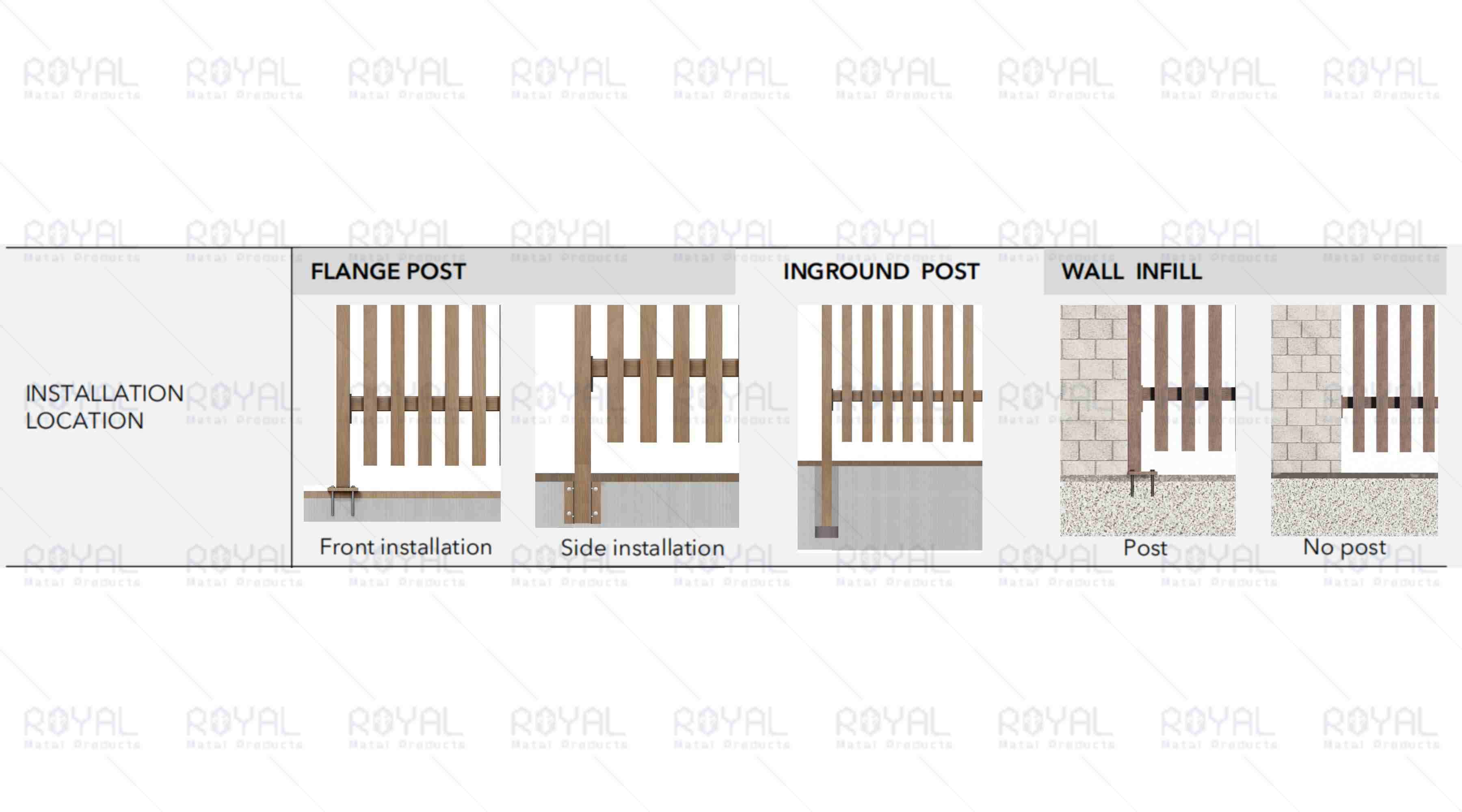
Flanged Posts – Surface Mounted for Hardscapes
What Are Flanged Posts?Flanged posts have a base plate (flange) welded to the bottom and are bolted directly onto solid surfaces such as concrete slabs, decks, or paved patios.
Installation Steps:
Position the post on the surface.
Drill holes through the flange.
Anchor with heavy-duty bolts or expansion anchors.
Best For:
Concrete patios and driveways
Decks or terraces
Urban areas with limited soil access
Pros & Cons:
✅ Fast installation, minimal digging
✅ Clean, modern appearance
❌ Requires strong base
❌ Slightly lower resistance for tall fences
Inground Posts – Traditional Strength for Soil
What Are Inground Posts?Inground posts are buried into the ground and usually set in concrete. This traditional method provides maximum stability for heavy or tall fences.
Installation Steps:
Dig a hole to the recommended depth (typically 30–40% of post length).
Check post vertical alignment.
Fill the hole with concrete or compacted gravel for strength.
Best For:
Lawns, gardens, and open soil areas
Privacy fences and tall panels
High-wind locations
Pros & Cons:
✅ Superior strength and stability
✅ Ideal for tall and heavy fences
❌ Labor-intensive, requires curing time
Wall Posts – Mounting on Existing Structures
What Are Wall Posts?Wall posts are mounted to walls or existing vertical structures. They are perfect when ground access is limited or digging is not feasible.
Installation Steps:
Select a structurally strong wall.
Secure the post using brackets or flanges.
Use anchors suitable for masonry or concrete walls.
Best For:
Terraces, patios, or retaining walls
Areas near utilities or obstacles
Fences that attach to buildings
Pros & Cons:
✅ Works in limited ground-access areas
✅ Flexible for trellis or elevated fencing
❌ Wall must bear load; may need reinforcement
Comparison Table – Quick Reference
Installation Tips for Long-lasting Fences
Flanged Posts: Use anchors rated for load; ensure concrete or deck slab is strong.
Inground Posts: Follow local code for depth; concrete provides lateral stability.
Wall Posts: Confirm wall strength; use correct masonry anchors.
Choosing the Right Post Type
Flanged Posts: Quick, modern solution for hard surfaces.
Inground Posts: Strong, traditional choice for privacy, tall, or heavy fences.
Wall Posts: Best when ground access is restricted or attaching to walls.
Pro Tip: Always consider wind load, fence height, soil conditions, and building codes when selecting your post type. Proper installation ensures your fence is both secure and aesthetically pleasing for years.